Thursday, November 13, 2014

REPOST: American Schools Are Training Kids for a World That Doesn’t Exist

American students are falling behind children from other countries in terms of their reading and math skills. In the following article from Wired.com, David Edwards discusses why the country’s education is ranking poorly on the world educational performance scale:

Image Source: wired.com

Are Americans getting dumber?

Our math skills are falling. Our reading skills are weakening. Our children have become less literate than children in many developed countries. But the crisis in American education may be more than a matter of sliding rankings on world educational performance scales.

Our kids learn within a system of education devised for a world that increasingly does not exist.

To become a chef, a lawyer, a philosopher or an engineer, has always been a matter of learning what these professionals do, how and why they do it, and some set of general facts that more or less describe our societies and our selves. We pass from kindergarten through twelfth grade, from high school to college, from college to graduate and professional schools, ending our education at some predetermined stage to become the chef, or the engineer, equipped with a fair understanding of what being a chef, or an engineer, actually is and will be for a long time.

We “learn,” and after this we “do.” We go to school and then we go to work.

This approach does not map very well to personal and professional success in America today. Learning and doing have become inseparable in the face of conditions that invite us to discover.

Over the next twenty years the earth is predicted to add another two billion people. Having nearly exhausted nature’s ability to feed the planet, we now need to discover a new food system. The global climate will continue to change. To save our coastlines, and maintain acceptable living conditions for more than a billion people, we need to discover new science, engineering, design, and architectural methods, and pioneer economic models that sustain their implementation and maintenance. Microbiological threats will increase as our traditional techniques of anti-microbial defense lead to greater and greater resistances, and to thwart these we must discover new approaches to medical treatment, which we can afford, and implement in ways that incite compliance and good health. The many rich and varied human cultures of the earth will continue to mix, more rapidly than they ever have, through mass population movements and unprecedented information exchange, and to preserve social harmony we need to discover new cultural referents, practices, and environments of cultural exchange. In such conditions the futures of law, medicine, philosophy, engineering, and agriculture – with just about every other field – are to be rediscovered.

Americans need to learn how to discover.

Being dumb in the existing educational system is bad enough. Failing to create a new way of learning adapted to contemporary circumstances might be a national disaster. The good news is, some people are working on it.

Against this arresting background, an exciting new kind of learning is taking place in America. 

Alternatively framed as maker classes, after-school innovation programs, and innovation prizes, these programs are frequently not framed as learning at all. Discovery environments are showing up as culture and entertainment, from online experiences to contemporary art installations and new kinds of culture labs. Perhaps inevitably, the process of discovery — from our confrontation with challenging ambiguous data, through our imaginative responses, to our iterative and error-prone paths of data synthesis and resolution — has turned into a focus of public fascination.
Against this arresting background, an exciting new kind of learning is taking place in America.

Discovery has always provoked interest, but how one discovers may today interest us even more. Educators, artists, designers, museum curators, scientists, engineers, entertainment designers and others are creatively responding to this new reality, and, together, they are redefining what it means to learn in America.

At Harvard University, where I teach, Peter Galison, in History of Science, asks his students make films, to understand science; Michael Chu, in business, brings students to low income regions to learn about social entrepreneurship; Michael Brenner, in Engineering and Applied Science, invites master chefs to help students discover the science of cooking; and Doris Sommer, in Romance Languages, teaches aesthetics by inviting students to effect social and political change through cultural agency. Similarly, in the course I teach, How to Create Things and Have Them Matter, students are asked to look, listen, and discover, using their own creative genius, while observing contemporary phenomena that matter today.

Because that’s what discoverers do.

A New Kind of Learning Lab

Learning by an original and personal process of discovery is a trend on many US university campuses, like Stanford University, MIT, and Arizona State University. It also shows up in middle school, high school and after school programs, as in the programs supported by the ArtScience Prize, a more curricular intensive version of the plethora of innovation prizes that have sprung up in the last years around the world. Students and participants in these kinds of programs learn something even more valuable than discovering a fact for themselves, a common goal of “learning discovery” programs; they learn the thrill of discovering the undiscovered. Success brings not just a good grade, or the financial reward of a prize. It brings the satisfaction that one can realize dreams, and thrive, in a world framed by major dramatic questions. And this fans the kind of passion that propels an innovator along a long creative career.

Discovery, as intriguing process, has become a powerful theme in contemporary culture and entertainment. In art and design galleries, and many museums, artists and designers, like Olafur Eliasson, Mark Dion, Martin Wattenberg, Neri Oxman and Mathieu Lehanneur, invite the public to explore contemporary complexities, as in artist Mark Dion’s recent collaborative work with the Alaskan SeaLife Center and Anchorage Museum on plastic fragments in the Pacific Ocean. Often they make visitors discovery participants, as in Martin Wattenberg’sApartment, where people enter words that turn into architectural forms, or sorts of memory palaces. In a more popular way, television discovery and reality programs, from Yukon Men to America’s Got Talent, present protagonists who face challenges, encounter failure, and succeed, iteratively and often partially, while online the offer is even more pervasive, with games of discovery and adventure immersing young people in the process of competing against natural and internal constraints.

All this has led to the rise of the culture lab.

Culture labs conduct or invite experiments in art and design to explore contemporary questions that seem hard or even impossible to address in more conventional science and engineering labs. Their history, as public learning forum, dates from the summer of 2007, when the Wellcome Collection opened in King’s Cross London, to invite the incurably curious to probe contemporary questions of body and mind through contemporary art and collected object installations. A few months later, in the fall 2007, Le Laboratoire opened in Paris, France, to explore frontiers of science through experimental projects in contemporary art and design, and translate experimental ideas from educational, through cultural, to social practice. And in the winter 2008 Science Gallery opened in downtown Dublin to bring contemporary science experimentation to the general public (and students of Trinity College) with installations in contemporary art and design. Other culture labs have opened since then, in Amsterdam, Kosovo, Madrid and other European, American, Asian, African and Latin American cities. In the USA, culture labs especially thrive on campuses, like MIT’s famous Media Lab, Harvard’s iLab, and the unique metaLAB, run by Jeffrey Schnapp within Harvard’s Berkman Center. These will now be joined by a public culture lab, Le Laboratoire Cambridge, which opens later this month near MIT and Harvard, bringing to America the European model with a program of public art and design exhibitions, innovation seminars, and future-of-food sensorial experiences.

The culture lab is the latest indication that learning is changing in America. It cannot happen too fast.

We may not be getting dumber in America. But we need to get smarter in ways that match the challenges we now face. The time is now to support the role of learning in the pursuit of discovery and to embrace the powerful agency of culture.

Philanthropist Ken Von Kohorn believes that education should be more competitive and accessible to all students. Follow this Facebook page for the latest updates in American education.

Thursday, August 14, 2014

REPOST: What the U.S. could learn from the Polish education system

Coming from the bottom ranks in education, Poland has risen to the top in the past decade. And with the difficulties that the U.S. education system is currently facing, it may be good to learn some things from the Polish. Read more about this in this article from USA Today.

Image Source: usatoday.com

Is it time for the student to offer the teacher a few lessons?

Twenty-five years ago, Americans like economist Jeffrey Sachs were running around Poland helping to turn moribund socialism into a vibrant market economy. Now, with the U.S. trying to fix its lagging educational system, it might just learn a thing or two from Poland, which in the past decade has moved sharply forward from the rear of the international pack and beats the U.S. on most performance measures. And it didn't even spend a lot money to get there.

Poland now has the fourth-highest number of higher education students in Europe, behind the U.K., Germany and France. Reading, once an obstacle, became an asset — more so than in the U.S., the U.K., Germany or France. And 19th place in math on a survey by the Organization for Economic Cooperation and Development (OECD) has helped it produce some of Europe's brightest talent in the technology field. The U.S. ranked a "below average" 27th.

"Our curriculum is mostly based on the effects of education — not just what students know but what they can do, and how they can use their knowledge practically," Ewa Dudek, Poland's undersecretary of state for education, tells OZY. Dudek believes Poland's success comes from allowing students more scope for feedback on their education.

Of course, it's much more than that.

It was 1998, almost a decade after the fall of communism, and the country was flying in the aftermath of Sachs' market reforms. Deregulation and privatization made Poland's economy one of Europe's fastest growing.

But its schools lagged far behind and continued to rely on course materials barely changed since the Stalinist 1950s. Kids osmosed ideology and vocational training, grooming them for careers in heavy industry that had largely disappeared.

Leaders in the capital, Warsaw, saw a growing generation of underserved and uninspired students as an economic bear trap. Without drastic reforms, the country could kiss its decade of prosperity goodbye.

"We have to move the entire system — push it out of its equilibrium," urged then-Education Minister MirosÅ‚aw Handke.

Handke got his green light. With remarkable speed, in a year academia in Poland was unrecognizable. The demagoguery was ditched and in came a new form of general education that resisted specialization. Just a year after that, in 2000, Poland began to leap up the international league tables.

By 2012, the last time the OECD conducted its survey, Poland was one of the best teaching countries on earth.

In fact it's the only one to have gone from below average in the chart, which now measures 510,000 15-year-olds in 65 territories, to above — with a GDP ranking just 46th globally. On key indicators — math, science, reading — it came from behind to rank well ahead of the United States.

How did Poland do it?

Back in 1998, Handke, a former chemistry teacher, was staring at a horrible formula. Polish children went to primary school for eight years before being funneled into vocational training at age 14.

Under the revamped system, primary school lasts six years, followed by three years of a new comprehensive lower secondary school, before a decision is made on whether to send a student to vocational training. Knowledge — reading, writing, 'rithmetic — is valued above technical skill. Foreign language — especially English — became a key component. In 2000 only 1 percent of kids received four hours or more of language classes. By 2006 that figure was 76 percent.

But it's not about money. Poland spends around $5,000 per student annually from primary through tertiary education, but outperforms the United States, which spends around three times that amount.

Poland has its socialist past to thank for the rapid progress, says Izabel Olchonowicz, an education consultant: "People were very eager to modernize; they were waiting such a long time," she says. "Right now is the result of that."

The economy has continued to be strong. When Europe's economies were tumbling in 2009, Poland was its only island of growth, getting a 1.6 percent lift. Poland is far better off than when Handke had his say.

Teachers might disagree. Poland remains a low payer — around $650 a month for teachers compared with the national average for all workers of $945. Slawomir Broniarz, the country's most senior teachers unionist, warns that low pay might put Poland's trajectory in doubt, primarily because of slipping standards of training. "We've asked many times for the reform of teacher training, because they are not good enough for these times. We need new attitudes, programs and better preparations for future challenges."

"Teaching is very demanding," says Olchonowicz, "and I think that what they get for it is not enough. It is not motivating, and if Poland needs to advance its education system, the salaries of teachers have to come with it."

Poland's rapid development of foreign language training may also have a negative side effect. Many Poles are leaving home to gain skills abroad. While that helps the technology sector if they return, many don't.

But despite the cracks, Poland's educational system is an example to most other countries, and proof that it's not just money that makes good students.

Ken Von Kohorn is a socio-political writer and a big believer in quality education for all. Follow this Twitter account to keep track of the reforms in the U.S. education system.

Wednesday, July 9, 2014

REPOST: Is Competition The Cure For Mediocre U.S. Math Scores?

Can the introduction of more competitive atmospheres improve mathematics competency and proficiency in American education? James Martin Crotty of Forbes.com writes about how some states and schools are helping the U.S. get back on track.

Image source: Forbes.com
Even though the U.S. lags in international tests of math competency — as my previous post, ‘The Cause of Mediocre U.S. Math Scores’, made clear — recent assessments of math proficiency at the national level suggest that the U.S. is slowly gaining traction. According to the National Assessment of Education Progress, 36 percent of 8th-grade students showed ‘Proficient’ or ‘Advanced’ comprehension of mathematics in 2013, compared to 15 percent in 1990.

4th-graders showed similarly promising statistics, increasing in mathematics comprehension from 13 to 42 percent between 1990 and 2013. Forty-one percent of public school students at grade 4, and 34 percent at grade 8, performed at or above the ‘Proficient’ level in mathematics in 2013.

So, what has suddenly changed? While state-to-state, proficiency in mathematics varies widely — between 19 and 59 percent — it seems that some district outliers have found strategies that drive home math comprehension much more effectively. And their success has bolstered the U.S. national math average.

As just one of several examples, take Baldi Middle School, situated in one of Philadelphia’s poorer districts. Despite its low economic status, Baldi Middle School excels at mathematics.

In a nationwide online math competition involving 6,000 schools in 45 states, Baldi ranked fifth, with students solving more than 17 million math problems correctly in just 10 months. Baldi has consistently ranked among the top ten schools in the nation for this type of competition for the past five years.

All this because, according to Huffington Post columnist and Suntex International CEO Robert Sun, Baldi’s 1,200 students are “engaged, empowered and energized” by the school’s high-performance “culture.”

Sun writes.: “It begins with a concept known as Deep Practice. In sports, when we swing a bat and miss the ball, we receive instant feedback through our senses. Players learn easily and naturally through a practice loop where proficiency is attained through immediate awareness of success or failure.”

To create this environment, Sun conjured up the First in Math Online Program, a software package where students feel like they’re playing a video game, even as it requires students to exercise math skills in a kind of immersive, brute-force approach. One of the statistics First in Math tracks is the number of math problems students solve. Since 2002, the number has climbed into the hundreds of millions.

The game itself, 24 Challenge, is nested within a nationwide network of schools that compete against each other, so students also have an additional, and more elemental, urge to do well.

One year after adopting the game, the Philadelphia School District showed a 7.4% increase in fifth grade students scoring at the Proficient and Above level, compared with a 5.2% increase for students statewide. Improvement for eighth graders was even more impressive: an 11.1% increase in students scoring Proficient and Above versus a 6.1% increase statewide.

Philadelphia students continue to show success, solving 948 million math problems in the past nine years and increasing the percentage of students scoring Proficient and Above on the Pennsylvania System of School Assessment tests every year, for a total gain of 39.5%.

Sun attributes the success not to the game itself, but from the learning philosophy of Deep Practice that the game was built on. The lesson: if you create a system of instant, non-judgmental feedback, math becomes less intimidating, and students will be more willing to independently engage with it.

Gildo Rey Elementary in Auburn, Wash., shares success similar to Baldi, but from more of a hands-on approach taken by teachers.

The Seattle Times reported earlier this year that Gildo Rey Elementary, despite a poverty rate of 88 percent, saw students’ test scores ascend to a 95 percent passing rate, up from the 30’s just ten years before. To restructure a system accused of “teaching to the test,” teachers at Gildo Rey now jointly plan lessons, pore over student work, test students frequently, and adjust the curriculum weekly — sometimes daily.

The Seattle Times reports: “Teachers conduct class at a quick clip, starting sentences that students promptly finish, or telling them to raise their hands when they know an answer or whisper it to their neighbor.”

This system, built on a framework of “explicit instruction”, fosters deep concentration and intense engagement from the students, creating an environment that psychologist Mihaly Csikszentmihalyi calls “Flow.”

Csikszentmihalyi described the meaning of “flow” to Wired in 1996: “[Flow is] being completely involved in an activity for its own sake. The ego falls away. Time flies. Every action, movement, and thought follows inevitably from the previous one, like playing jazz. Your whole being is involved, and you’re using your skills to the utmost.”

To achieve flow, a balance must be struck between the difficulty of the challenge and the skill of the performer, and both must be set equally high. If skill and challenge are low, the result is often apathy.

Apathy can also stem from a lack of goals, says Csikszentmihalyi. Goals, or competition, can help “turn a random walk into a chase … Competition is an easy way to get into flow.” Just ask Michael Jordan.

The goals and rewards in a rigorous mathematics education should be implicit in the education itself. But, that’s admittedly a hard sell to a population where, according to a Raytheon survey, 44% of students “would rather take out the trash than do math homework.”

If the goals of mathematics are simply too vague or out of reach for US students, maybe a competitive approach is a solution this nation — which is highly competitive in other spheres (sports, commerce, political and military might) — should take a closer look at. I certainly found competition to be highly effective in getting otherwise recalcitrant learners to fully engage in the rigors of debate research and argument, as my documentary Crotty’s Kids makes clear.

Perhaps if we made Math more like a high-stakes academic sport, my experience, and now anecdotal evidence, suggests that US math test scores might start to go up dramatically.

Ken Von Kohorn is a sociopolitical writer who is passionate about issues surrounding educational proficiency. Follow this Twitter page for more on in-depth discussions on these issues.


Tuesday, March 25, 2014

REPOST: What The U.S. Can Learn From Finland, Where School Starts At Age 7

NPR correspondent Claudio Sanchez delves into Finland’s primary education system, where all teachers have a bachelor’s degree and all kids under 7 enjoy the right to child care and preschool.
Finland, a country the size of Minnesota, beats the U.S. in math, reading and science, even though Finnish children don't start school until age 7.

Despite the late start, the vast majority arrive with solid reading and math skills. By age 15, Finnish students outperform all but a few countries on international assessments.

Krista Kiuru, Finland's minister of education and science who met with education officials in Washington recently, chalks success up to what she calls the "Finnish way." Every child in Finland under age 7 has the right to child care and preschool by law, regardless of family income. Over 97 percent of 3- to 6-year-olds attend a program of one type or another. But, says Kiuru, the key to Finland's universal preschool system is quality.

"First of all, it's about having high-quality teachers," Kiuru says. "Day care teachers are having Bachelor degrees. So we trust our teachers, and that's very, very important. And the third factor: we have strong values in the political level."

Political consensus and support help, Kiuru says.

Author Amanda Ripley says she didn't really believe it, so she went to Finland and several other top-performing countries to see for herself. She wrote The Smartest Kids in the World: And How They Got That Way. Compared to Singapore, South Korea or Japan, she says, Finland's approach is pretty laid back, even though its standards — like what preschoolers should know and be able to do — are set by Finland's National Curriculum Guidelines for early childcare.

Image Source: www.npr.org
"Kids are almost all in some kind of day care, all of whom are working in the same curriculum that's aligned with what they're going to learn in school," she says. "That's a level of coherence that most U.S. kids will never experience because we don't have a coherent system with highly trained people in almost every classroom."

It's a level of coherence that President Obama has repeatedly called for. Until there's a national consensus on standards and what quality preschool should look like, Ripley says early childhood education in the U.S. will remain fragmented.

Then there's the money issue. In Finland, of course, preschool and day care are basically free, because people pay a lot more taxes to fund these programs. Another glaring difference is the child poverty rate, which is almost 25 percent in the U.S. — five times more than in Finland.
"And in most countries I've traveled to, they see poverty and education as linked. You cannot separate them," Ripley says.

In Finland, children from poor families have access to high-quality preschool. In the U.S., most poor children get poor quality preschool, if they get any at all.

"It's very clear from the research in the U.S. that our problems with inequality [and] school failure are set when children walk in the school door," says Steve Barnett, director of the National Institute for Early Education Research at Rutgers University. Sixty percent of the poorest 4-year-olds in the U.S. get no preschool. Most, says Barnett, start school 18 months behind.

"Those kids are going to be in a spiral of failure, and we set that up by not adequately investing before they get to kindergarten," Barnett says. "We certainly can learn from countries like Finland."

Kiuru says she's in no position to say why the U.S. is struggling so much with this issue, but if her country has a lesson to offer, it's this: "If you invest in early childhood education, in preschool and day care, that will lead [to] better results," Kiuru says.

That, she says, is the "Finnish way."
Ken Von Kohorn is a socio-political writer and a big believer in quality education for all. Read more about his views and advocacies on this Facebook page.

Thursday, February 20, 2014

REPOST: Cats Host Big Brothers Big Sisters Clinic

Aside from the basketball, the NBA is also known for its charitable acts.  Recently, the Charlotte Bobcats and the Lady Cats welcomed the Big Brothers Big Sisters for a basketball clinic.  Read the full story in this article from NBA.com.
Image Source: www.nba.com
Members of the Charlotte Bobcats and the Lady Cats reached out to the community by hosting the Big Brothers Big Sisters of Greater Charlotte for a basketball clinic on Jan. 27, 2014 at Time Warner Cable Arena.

The night began with an introduction of the Bobcats players, then children ages 6-13 and their mentors dispersed and participated in several stations set up to teach them important basketball skills. Players instructed the kids on the value of practice and teamwork through passing, shooting, dribbling and defensive drills.

Guard Ramon Sessions reflected on his childhood and stressed the importance of the event being an enjoyable experience for the kids involved.

“I reminds me of growing up as a kid just being out here and having fun,” Sessions said. “Just seeing the smiles on their faces, it’s tremendous. It is really a joy to be here.”

Forward Cody Zeller also enjoyed his time with the kids and was thankful to be in a position to give back.

“I remember coming to camps like this growing up and how big of an impact it had on me,” Zeller said. “I feel that it’s a part of my duty to give back to the kids and it’s neat to team up with the Bobcats to put on an event like this.”

After mentors and kids spent six minutes at each of the five stations, they were given the opportunity to ask any question to the Bobcat players. Some of which evoked laughter from the players and kids. After the Q&A, kids, mentors and players posed for a group photo and the kids were given a gift bag upon leaving.

Director of Match Support for the Big Brothers Big Sisters of Greater Charlotte, Jenelle Martin, expressed the importance of the event for the program.

“It’s great that they have role models to look up to that are positive,” Martin said. “It’s a really great opportunity for our littles to experience interacting with the players and having fun.”
A philanthropist, Ken Von Kohorn has been an active “Big Brother” in the Big Brothers Big Sisters program, working with a boy who will be in college this fall.  Follow this Twitter page for more articles about the Big Brother Big Sisters program.

Thursday, January 16, 2014

REPOST: Science Education In The U.S. Is Mediocre. Here’s

WBUR.org contributor Jacqueline Miller laments the dismal state of science education in the U.S. She then discusses in the article below concrete actions that would help develop science-literate citizens.

Jacqueline Miller: American students are simply not learning the content and skills that will help them succeed in the 21st century, where technology and science are core to everyday life.
(Image source: wbur.org)

Once again, U.S. students have performed poorly on an international test and the hand wringing has begun. This time it is the Program for International Student Assessment, or PISA, which measures how well students can apply what they have learned in reading, mathematics, and science to practical problems. Out of 34 Organisation for Economic Co-operation and Development member countries, United States students ranked 17th in reading, 26th in math, and 21st in science.

As observed by Diane Ravitch and other education historians, the U.S. has rarely fared well on the lineup of international tests that began in the mid-1960s. Whether these tests are a meaningful indicator of the quality of education and global economic success is subject to debate.

What is not debatable, though, is that science education for all students in this country is, in and of itself, mediocre. American students are simply not learning the content and skills that will help them succeed in the 21st century, where technology and science are core to everyday life.

Over the years, I have observed classrooms where students had already decided that science and math were not for them. “I hate science, I hate math,” came the exasperated refrain. But when I asked them what they hated and how it could be made better, I discovered that they actually loved the experimentation of science and were engaged by the relevance of math to their lives. What they hated was how these subjects were taught.

As stated in the National Research Council’s 2012 report “Education for Life and Work: Developing Transferable Knowledge and Skills in the 21st Century,” students thrive when they are engaged in course content that focuses in depth on core concepts within a discipline, contextualizes the learning in real-world situations relevant to their lives, and provides investigative experiences that require transfer of knowledge to address a challenge or answer a question.

Yet, for most students, the study of science is still an exercise in memorization and regurgitation. A jumble of disconnected facts is presented, unaccompanied by opportunities for investigative, problem-solving experiences. We are not educating students to succeed on international exams, but, more importantly, we’re not developing science-literate citizens or encouraging future scientists, either.

Studies have shown that curriculum and teachers are the two most important determinants of student learning and achievement. Effective curriculum shapes not only what content is taught but how it is taught. This, in turn, affects student achievement of the learning goals. Today, far too few schools are using pre-K through 12 science curricula that:
  • Build students’ understanding of big, fundamental concepts over time in a coherent conceptual flow
  • Explore fewer topics in greater depth
  • Promote understanding and use of the practices and competencies required of scientific investigations
  • Incorporate ongoing assessment to inform instruction
  • Motivate students to learn by engaging them in hands-on investigations and real-world problems

Simultaneously, far too few teachers have the opportunities or support they need to implement these types of materials. Extensive testing requirements have driven too many teachers to cover massive amounts of content and teach to the test. A lack of instructional and pedagogical resources thwarts their chances to move their own practices to a more ambitious teaching model. And although we know that digital tools can enhance student learning and extend teaching practice, few teachers have access to training and support in using these tools appropriately.

Achieving deeply rooted change that ensures students’ success and equips them for life in the 21st century starts with our teachers. Providing these dedicated individuals with ongoing professional development experiences that help build a strong content background, knowledge of effective teaching strategies, and understanding of appropriate uses of digital resources should be the standard, not the exception.

We also need policymakers who are more concerned with what students are learning than how they are performing on international exams. If, as a nation, we make a concerted effort to improve the learning and teaching of science, then better test results will surely follow. Policy-making groups who will lead this effort must include teachers who, more than anyone, understand the reality of the classroom and can lead U.S. science education from mediocrity to excellence.

This indictment of science education goes far deeper than PISA scores. But we know how to fix what’s wrong. Let us start now — and not lose a generation of science-literate citizens, mathematicians, and scientists to a failure in teaching when the inspiration to explore, to experiment, and to learn is all around us.


Nonfiction writer and philanthropist Ken Von Kohorn believes that literacy helps shape the future of America. Follow this Twitter account to keep track of the reforms in the U.S. education system.

Friday, October 25, 2013

Failure as motivation to success

One of the key problems with education in the United States at the turn of the 21st century is the increased focus on self-esteem as a driver of student performance without objective justification for the merits of such paradigm.  It had been correctly assumed as late as the early 1990s that self-esteem was related to better exam results, but the correlation between them was misinterpreted.  Students were made to feel good about themselves with the hopes that this would help them excel.
Image Source: www.authorsxpress.com
It was discovered much later that the correlation, in fact, works in reverse.  While students should be encouraged to excel, artificially lowering the bar meant that they lost motivation to learn.  Moreover, denying children the learning experience gained from accepting failure curtailed development toward success.
Image Source: www.wordpress.com

Handled correctly, failure can be used as a catalyst for future success.  Professionals such as Dr. Martin Seligman suggest that failure, if treated as isolated events that have specific causes, would encourage children to learn behaviors that would instead lead to success.  By treating failure not as something to be avoided but as a welcome challenge for further learning, students could top their current performance and be motivated to improve.

Image Source: www.cloudfront.net
As life is nothing without failure, children should learn to accept and learn from their mistakes as they grow and earn their sense of self-worth through their successes and through the failures they overcome.

Ken Von Kohorn is a Connecticut-based nonfiction sociopolitical writer who is deeply invested in the success and welfare of children. Visit this Twitter page for more updates on literature, education, and more.

Thursday, June 13, 2013

Clandestine in Chile: Gabriel Garcia Marquez's nonfiction

When a Nobel Prize-winning novelist ventriloquises Chile’s prominent writer and filmmaker, the result is certainly a no blah-kind-of-reportage: it is eloquent in style, as though Garcia Marquez himself has put Miguel Littin’s shoes on during the years of his exile, as if Garcia Marquez and Littin are no different individuals—as though they bought braved the life outside Chile to plan on the fall of Pinochet.
Image source: www.nybooks.com

Garcia Marquez’s intentions are clear: he is writing Littin’s years of exile not just to highlight the benighted Chile in the hands of Pinochet and the United States but also to make Littin’s story as realistic as how really the filmmaker has lived his life outside the bosom of Latin America. The result: a first-person narrative of pure entertainment, desperation, and not-so-laughable realities that befall the filmmaker-turned-middle-aged caper and vainglorious artist.

Image source: www.guardian.co.uk

Clandestine in Chile is honest to its goal. It never disappoints and it is never more than picturesque as Garcia Marquez’s magic realist novels. It is pure reportage, as though magic, in its absence, has played well to make this short yarn dance gracefully. However, the real magic is in Garcia Marquez’s writing acumen, his keenness to unite the techniques he has used in novels with Miguel Littin’s unadulterated account of his self-imposed expiation to come up with a powerful book that could have awarded Garcia Marquez a separate Nobel award: The Peace Prize.

Image source: www.littinmenz.com

Ken Von Kohorn is a nonfiction writer who writes on socio-political issues. This Twitter Page shows an elaborate account of his works.

Monday, May 6, 2013

Children’s books, and when they become more than children’s books

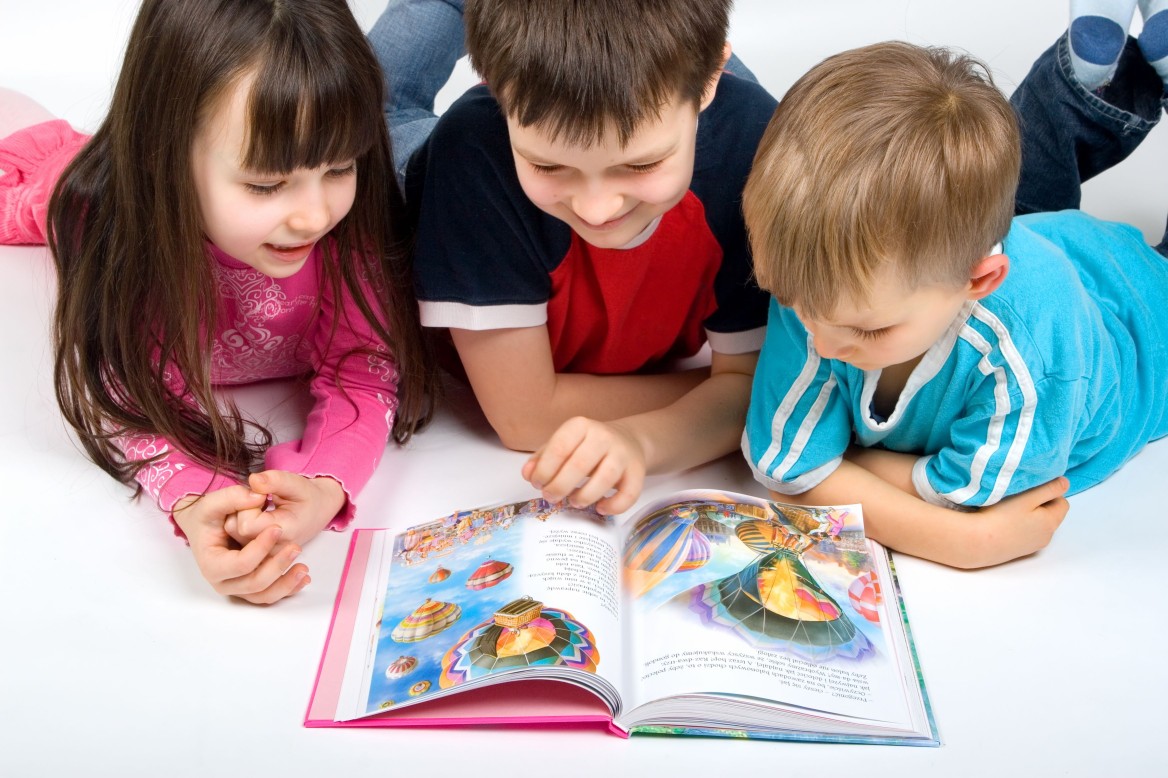
Image source: Childrens Books and Music

To children, children’s books are just mere pieces of literature that tell stories of happy-ever-afters. Typically presented with flamboyant covers and with pages punctuated by colorful artwork, children’s books appear as though they were designed to accommodate the fledglings’ limited understanding.

But there is more to children’s books.

In a world that seems to be dominated by hi-tech video games and non-child-friendly TV shows, it has become even harder for parents to turn their children’s attention away from technology. In the 21st century, reading is still important, experts say, and parents must encourage their children to learn – and love -- reading.

Image source: Teach-our-kids.co.uk

Children’s books, from picture books to young-adult fiction, are a good alternative to video games and TV shows. They can be a child’s personal guidance to morality, to becoming a good member of society. Dr. Seuss’ The Cat in the Hat tackles, in the simplest form, worldly and political themes, Ray Bradbury’s Fahrenheit 451 teaches about the importance of books and reading, Antoine de Saint-Exupéry’s The Little Prince delves into the allegory of the human condition, Mark Twain’s Tom Sawyer tells of the quintessence of dreaming and ambition, and Louisa May Alcott’s The Little Women speaks of family and personal development. These are just some of the many book titles that can help develop a child’s imagination, creativity, and social behavior.

Image source: www.ocde.us

It has been said time and again that reading is an essential element in a child’s formative years. Children’s books are more than just books – they serve as passageways to a child’s bright future.


A nonfiction writer, Ken Von Kohorn believes that literacy helps shape the future of America. Follow this Twitter account to know more about his advocacies.

Tuesday, April 2, 2013

REPOST: How To Get A Jumpstart On Your Philanthropy

Willa Seldon notes in her article for Forbes that “giving money away is easy.” However, “doing it right, so that you get more and better results over time, is hard.” Seldon is a partner in The Bridgespan Group’s San Francisco office, and coauthor of “High-Stakes Donor Collaboration,” which appears in the spring 2013 issue of the Stanford Social Innovation Review. 

Image source: forbes.com
Giving money away is easy. You just write a check or approve a grant proposal. But doing it right, so that you get more and better results over time, is hard. Newcomers to philanthropy often feel this tension most acutely. Many have good intensions that far outstrip their knowledge of the cause they choose to support.

If you fall into this category, take heart. You’re not alone. Philanthropy is deeply personal, which explains the profusion of US nonprofits supporting all sorts of worthwhile endeavors. Because philanthropy is deeply personal, it makes sense that funders invest broadly. But what about the portion of your philanthropy that is meant to be strategic? In such cases, flying solo often doesn’t lead to achieving the desired results.

As a newcomer with more passion for an issue than in-depth knowledge, the road to success can lead to working with like-minded philanthropists and foundations from whom you can learn. So before you invest time and money developing your own expertise in an area of interest, consider collaborating with other more experienced funders and learning from them. That’s a course charted by a funders’ collaborative called Oceans 5.

Launched in early 2011, Oceans 5 is dedicated to expanding marine reserves and constraining overfishing. The Oceans 5 founders wanted to bring in a variety of partners—whether or not they had marine expertise. In fact, one of Oceans 5’s objectives—and a key part of its long-term growth strategy—is to provide a forum for funders who lack expertise in ocean conservation but who want to learn from more experienced partners, like cofounder and Oak Foundation Chair Kristian Parker. He explains it this way: “Oceans 5 was an opportunity to reach out to less experienced foundations and philanthropists to share what we have learned in our 12-plus years of grantmaking in marine conservation. We hoped that for foundations that did not intend to hire specialized staff, Oceans 5 would provide a safe, well-informed platform from which to invest their philanthropic time and money.”

The group is comprised of five partners who commit at least $1 million annually for a minimum of three years and members who commit $200,000 a year. Board meetings give program director Chuck Fox, an experienced marine conservationist, an opportunity to review investment opportunities and present recommendations. “It’s been fantastic to watch these philanthropies come together, engage in deep dialogue around projects, and become far more strategic in their giving,” says Tracy Durning, a board member and cofounder.

For Addison Fischer, a board member and cofounder of Planet Heritage Foundation, the shared knowledge around the table and collective funding is critical to the success of the group. “As a smaller foundation with no ocean-specific expertise, we would not have been able to do this nearly as effectively on our own. So, from an investment standpoint, having a shared, high-level oceans program director in place is very beneficial in making far more strategic investments overall.”

Funder collaborations that share specialized information aren’t just for newcomers to philanthropy. They work for large, established foundations as well. The Energy Foundation is a case in point.

Launched in 1991, the Energy Foundation today is the largest philanthropic funder of nonprofits working on energy efficiency and renewable energy sources. It was started as a joint initiative of three newly appointed foundation presidents, Peter Goldmark of the Rockefeller Foundation, Rebecca Rimel of the Pew Charitable Trusts, and Adele Simmons of the John D. and Catherine T. MacArthur Foundation. At the time, none of the foundations had an energy program. As Rimel recalls: “We were convinced that this could lead to a different model of grantmaking. At that time, people talked a lot about collaboration, and we thought ‘let’s just do it.’”

Recognizing their organizations’ limited knowledge in the energy arena, the three foundation presidents hired a recognized authority, Hal Harvey, to help identify a workable approach to boosting clean energy development. After months of research, Harvey and his team developed a business plan to launch the Energy Foundation as a grantmaker and advocate for change in the field. The three founding organizations collectively granted $100 million for the project over 10 years. The joint investment allowed the funders to share specialized expertise rather than pursue a similar path on their own.

A decade on, a second wave of funders, including the Hewlett Foundation, joined the collaborative—in large part persuaded by the expertise and platform that the Energy Foundation had developed. As Hewlett vice president Susan Bell explains, “If we wanted to make a difference on the issue, we would have had to staff up to do that, and the Energy Foundation allowed us not to. They served as our program staff and could navigate among existing organizations that needed funding.”

In effect, large and small foundations today can outsource all or parts of their energy programs to the Energy Foundation. Along the way, the foundation has grown in size, financial clout, and ambition. Working through grantees, it has had significant impact on promoting adoption of state and federal vehicle efficiency standards, more stringent residential and commercial building codes to reduce energy consumption, and development of renewable energy technology. In 2011 alone, the Energy Foundation made 592 grants to 347 groups, totaling $76.2 million.

Oceans 5 and the Energy Foundation are variations on a theme: collaboration is a great way for philanthropists and foundations—new and experienced—to share specialized knowledge and accomplish more together than acting separately. At a time when many of society’s problems are too big to tackle alone and with limited resources, donors can accomplish more together than apart. It’s a compelling way to jumpstart your philanthropy.

Ken Von Kohorn is an active member of the non-profit organization Big Brothers Big Sisters of America. Like this Facebook page for timely updates on philanthropy.

Thursday, March 14, 2013

Cherishing the few good things left in American politics


Image source: barcelonareview.com

One great quality that Americans possess that they themselves barely notice and give importance to is their behavior towards politics. In the southeast region of Asia, in the Philippines, the Filipinos are envious of how American politicians react before, during, and after the election. According to them, America’s politics is an exemplary model that their country should start emulating.

Unlike in other democratic countries, American politicians know how to concede and accept defeat. In spite of the close fight and the pre-written victory speech in his hands, Mitt Romney still managed to brave the stage to publicly concede to the incumbent president and, the most moving part is, the trodden challenger even promised to support Obama’s plans for the country.


Image source: illumemagazine.org

Countries outside North America also admire how elections are done in the States. In the US, candidates only focus on their opponents’ platforms and not on their personal lives—whereas the precise opposite occur in Thailand, in Indonesia, or in the Philippines wherein lambasting the adversary’s personal life is a staple political stance to move up and improve in the electoral ratings or to gain public sympathy. It rarely happens in the States, for politics here is always “platform versus policy” and never “policy against lifestyle.” But the dismaying thought is that Americans seem to have no time looking at the few good things that are left in their country.


Image source: childdevelopmentinfo.com

For more insights and updates from Ken Von Kohorn, follow this Twitter account.

Monday, February 4, 2013

What difference does it make? The school systems outside America

Image source: faa-hk.com


Most modern school systems that exist today were modeled by their respective countries from the systems of the West, from the present superpowers at the time they’ve begun reforming their old systems. For instance, Japan’s is borrowed heavily from the German and French educational systems, as these two countries were among those that had the soundest economy during 1868 when the Japanese government expressed its intention of catching up with the Western standards of living. In the Philippines, conversely, the present-day educational system has traces of both American and Spanish methods, since the country has experienced massive educational reforms during the years of being occupied by the aforesaid western nations.

Even though Western education seems to be the dominant educational system in the world, does it mean that it is the best?

Sadly, the answer is a big “no.”


Image source: wikimedia.org


In France, the revolution has gone down to the ground level, as the teachers themselves revolt the “elitist” way by softening the iron-fist method that highlights the French way of teaching and by focusing more on the students’ skills and not on the absence of variation found in all French classrooms that continuously kills the system. In Germany, however, the quandary lies on the entangled policies due to the difference in educational standards per state, since it is not controlled entirely by the central government but administered by the states. Here in America, everyone is aware of the unending clamor for more accessible education despite the big budget allocation the government has given to the education sector. Thus, every country seems to have its own problem of overhauling its current education system.

Moreover, many Westerners pursue their education abroad.

If they travel ashore just to get the cheap and quality education they want, does this mean that the education back in their homeland is not only unattainably expensive but also poor in quality? Does this also mean that the system that was only borrowed from the West has finally overtaken the standards and quality of its foundation?


Image source: the-nri.com

So what’s now in store for the American education?

Besides being a businessman, Ken von Kohorn is a passionate leader at The Family Institute of Connecticut, an educational nonprofit that targets families and children with the intention of imparting cultural, religious, and educational values. Follow this Facebook page to learn more about his endeavors and advocacies.

Thursday, January 17, 2013

REPOST: Gifted, Talented and Separated

This article published in The New York Times explores how students in a school in New York City are divided by the gifted label--and race.

Image source: The New York Times

IT is just a metal door with three windows, the kind meant to keep the clamor of an elementary school hallway from piercing a classroom’s quiet. Other than paint the color of bubble gum, it is unremarkable.
But the pink door on Room 311 at Public School 163 on the Upper West Side represents a barrier belied by its friendly hue. On one side are 21 fourth graders labeled gifted and talented by New York City’s school system. They are coursing through public school careers stamped accelerated.

And they are mostly white.

On the other side, sometimes sitting for reading lessons on the floor of the hallway, are those in the school’s vast majority: They are enrolled in general or special education programs.

They are mostly children of color.

“I know what we look like,” Carolyn M. Weinberg, a 28-year veteran of P.S. 163, said of the racial disparities as she stood one day in the third-floor hallway between Room 318, where she and a colleague teach a fourth-grade general education class, and the one where Angelo Monserrate teaches the gifted class, Room 311.

“I know what you see,” said Ms. Weinberg.

There are 652 students enrolled at P.S. 163 this year, from prekindergarten through fifth grade. Roughly 63 percent of them are black and Hispanic; whites make up 27 percent; and Asians account for 6 percent.

This reflects the flavor of the neighborhood, and roughly matches the New York City school system’s overall demographics.

Yet in P.S. 163’s gifted classes, the racial dynamics of the neighborhood, the school itself and the school system are turned upside down.

Of the 205 children enrolled in the nine gifted classes, 97, or 47 percent, are white; another 31 of the students, or 15 percent, are Asian. And a combined 65 students, or 32 percent, are black and Hispanic.

In the 21 other classes that enroll the school’s remaining 447 students, only 80, or 18 percent, are white.

The disparities are most apparent in the lower grades.

Of the 24 students in Karen Engler’s kindergarten gifted class, one is black and three are Hispanic. Ayelet Cutler’s first-grade gifted class has 21 students, one of them black and two Hispanic. There are two blacks and two Hispanics among the 26 students in Athena Shapiro’s second-grade gifted class.

On a recent morning, a line of Ms. Cutler’s students moved from the classroom to the corridor, ahead of the general education class of Linda Crews. A string of mostly white faces and then a line of mostly black and Hispanic ones walked down the hall of a school named for a New York politician who sought to end inequities in education: Alfred E. Smith.

It was 11:25 a.m., and the classes wound their way to the cafeteria, a cavernous room at the school’s western edge. Once there, the children sat with those in their own class, each one at a separate long white table that, for a moment, froze the divisions.

For critics of New York City’s gifted and talented programs, that image crystallizes what they say is a flawed system that reinforces racial separation in the city’s schools and contributes to disparities in achievement.

They contend that gifted admissions standards favor middle-class children, many of them white or Asian, over black and Hispanic children who might have equal promise, and that the programs create castes within schools, one offered an education that is enriched and accelerated, the other getting a bare-bones version of the material. Because they are often embedded within larger schools, the programs bolster a false vision of diversity, these critics say, while reinforcing the negative stereotypes of class and race.

Despite months of repeated requests, the city’s Education Department would not provide racial breakdowns of gifted and talented programs and the schools that house them. But the programs tend to be in wealthier districts whose populations have fewer black and Hispanic children, and far more children qualify for them in affluent districts than in poorer ones.

For the full version of the Times article, click here.

Through writing, Ken Von Kohorn campaigns for academic excellence in the country.   Learn more about his works and advocacies from this Facebook page.

Friday, January 4, 2013

How to bring our schools out of the 20th Century

By Claudia Wallis and Sonja Steptoe 
Read the full article here.

There's a dark little joke exchanged by educators with a dissident streak: Rip Van Winkle awakens in the 21st century after a hundred-year snooze and is, of course, utterly bewildered by what he sees. Men and women dash about, talking to small metal devices pinned to their ears. Young people sit at home on sofas, moving miniature athletes around on electronic screens. Older folk defy death and disability with metronomes in their chests and with hips made of metal and plastic. Airports, hospitals, shopping malls--every place Rip goes just baffles him. But when he finally walks into a schoolroom, the old man knows exactly where he is. "This is a school," he declares. "We used to have these back in 1906. Only now the blackboards are green."

American schools aren't exactly frozen in time, but considering the pace of change in other areas of life, our public schools tend to feel like throwbacks. Kids spend much of the day as their great-grandparents once did: sitting in rows, listening to teachers lecture, scribbling notes by hand, reading from textbooks that are out of date by the time they are printed. A yawning chasm (with an emphasis on yawning) separates the world inside the schoolhouse from the world outside.

For the past five years, the national conversation on education has focused on reading scores, math tests and closing the "achievement gap" between social classes. This is not a story about that conversation. This is a story about the big public conversation the nation is not having about education, the one that will ultimately determine not merely whether some fraction of our children get "left behind" but also whether an entire generation of kids will fail to make the grade in the global economy because they can't think their way through abstract problems, work in teams, distinguish good information from bad or speak a language other than English.

This week the conversation will burst onto the front page, when the New Commission on the Skills of the American Workforce, a high-powered, bipartisan assembly of Education Secretaries and business, government and other education leaders releases a blueprint for rethinking American education from pre-K to 12 and beyond to better prepare students to thrive in the global economy. While that report includes some controversial proposals, there is nonetheless a remarkable consensus among educators and business and policy leaders on one key conclusion: we need to bring what we teach and how we teach into the 21st century.

Right now we're aiming too low. Competency in reading and math--the focus of so much No Child Left Behind (NCLB) testing--is the meager minimum. Scientific and technical skills are, likewise, utterly necessary but insufficient. Today's economy demands not only a high-level competence in the traditional academic disciplines but also what might be called 21st century skills. Here's what they are:

Knowing more about the world. Kids are global citizens now, even in small-town America, and they must learn to act that way. Mike Eskew, CEO of UPS, talks about needing workers who are "global trade literate, sensitive to foreign cultures, conversant in different languages"--not exactly strong points in the U.S., where fewer than half of high school students are enrolled in a foreign-language class and where the social-studies curriculum tends to fixate on U.S. history.

Wednesday, November 28, 2012

Best Education In The World: Finland, South Korea Top Country Rankings, U.S. Rated Average


This article appeared in the Nov. 27, 2012 online edition of The Huffington Post. It discusses the report of education firm Pearson on what countries have the best education system.

The United States places 17th in the developed world for education, according to a global report by education firm Pearson.

Finland and South Korea, not surprisingly, top the list of 40 developed countries with the best education systems. Hong Kong, Japan and Singapore follow. The rankings are calculated based on various measures, including international test scores, graduation rates between 2006 and 2010, and the prevalence of higher education seekers. 

Pearson's chief education adviser Sir Michael Barber tells BBC that the high ranking countries tend to offer teachers higher status in society and have a "culture" of education.

The study notes that while funding is an important factor in strong education systems, cultures supportive of learning is even more critical -- as evidenced by the highly ranked Asian countries, where education is highly valued and parents have grand expectation. While Finland and South Korea differ greatly in methods of teaching and learning, they hold the top spots because of a shared social belief in the importance of education and its "underlying moral purpose."

The study aims to help policymakers and school leaders identify key factors that lead to successful educational outcomes. The research draws on literacy data as well as figures in government spending on education, school entrance age, teacher salaries and degree of school choice. Researchers also measured socioeconomic outcomes like national unemployment rates, GDP, life expectancy and prison population. 

The report also notes the importance of high-quality teachers and improving strong educator recruitment. The rankings show, however, that there is no clear correlation between higher pay and better performance. The bottom line findings:
  
1. There are no magic bullets: The small number of correlations found in the study shows the poverty of simplistic solutions. Throwing money at education by itself rarely produces results, and individual changes to education systems, however sensible, rarely do much on their own. Education requires long-term, coherent and focussed system-wide attention to achieve improvement.  

2.       Respect teachers: Good teachers are essential to high-quality education. Finding and retaining them is not necessarily a question of high pay. Instead, teachers need to be treated as the valuable professionals they are, not as technicians in a huge, educational machine.  

3.      Culture can be changed: The cultural assumptions and values surrounding an education system do more to support or undermine it than the system can do on its own. Using the positive elements of this culture and, where necessary, seeking to change the negative ones, are important to promoting successful outcomes.  

4.      Parents are neither impediments to nor saviours of education: Parents want their children to have a good education; pressure from them for change should not be seen as a sign of hostility but as an indication of something possibly amiss in provision. On the other hand, parental input and choice do not constitute a panacea. Education systems should strive to keep parents informed and work with them.  

5.      Educate for the future, not just the present: Many of today's job titles, and the skills needed to fill them, simply did not exist 20 years ago. Education systems need to consider what skills today's students will need in future and teach accordingly.


To be sure, South Korea's top spot doesn't come without a price. Stories of families divided in the name of education are all too common, to the extent that the phenomenon has bequeathes those families with a title of their own -- kirogi kajok, or goose families, because they must migrate to reunite.

But America's average ranking doesn't come as a surprise. A report recently published by Harvard University's Program on Education Policy and Governance found that students in Latvia, Chile and Brazil are making gains in academics three times faster than American students, while those in Portugal, Hong Kong, Germany, Poland, Liechtenstein, Slovenia, Colombia and Lithuania are improving at twice the rate. Researchers estimate that gains made by students in those 11 countries equate to about two years of learning.

What gains U.S. students posted in recent years are "hardly remarkable by world standards," according to the report. Although the U.S. is not one of the nine countries that lost academic ground for the 14-year period between 1995 and 2009, more countries were improving at a rate significantly faster than that of the U.S. Researchers looked at data for 49 countries.

The study's findings echo years of rankings that show foreign students outpacing their American peers academically. Students in Shanghai who recently took international exams for the first time outscored every other school system in the world. In the same test, American students ranked 25th in math, 17th in science and 14th in reading.

A 2009 study found that U.S. students ranked 25th among 34 countries in math and science, behind nations like China, Singapore, South Korea, Hong Kong and Finland. Figures like these have groups like StudentsFirst, headed by former D.C. schools chancellor Michelle Rhee, concerned and calling for reforms to "our education system [that] can't compete with the rest of the world."

Just 6 percent of U.S. students performed at the advanced level on an international exam administered in 56 countries in 2006. That proportion is lower than those achieved by students in 30 other countries. American students' low performance and slow progress in math could also threaten the country's economic growth, experts have said.

###